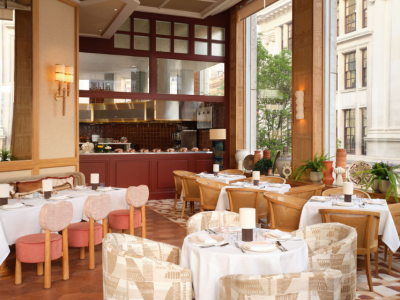
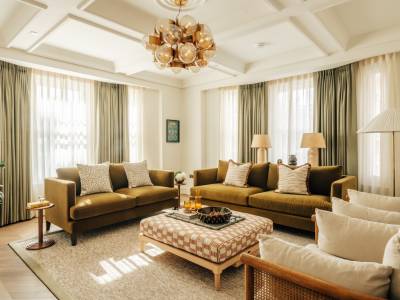
There’s a great debate raging online about taste. Who the purveyors are, whether it can survive the algorithmic era and if it even still matters. And whilst taste may be subjective, there are some clear guidelines when it comes to decorating your home. Yes, you want it to be a reflection of your personal taste, with many interior designers waxing lyrical about the importance of ensuring your home tells the story of you.
The Wall Art Mistakes to Avoid at Home
Words by
Clara Taylor
17th March 2026
We speak with the experts about the common wall hanging art mistakes to avoid when decorating your home.
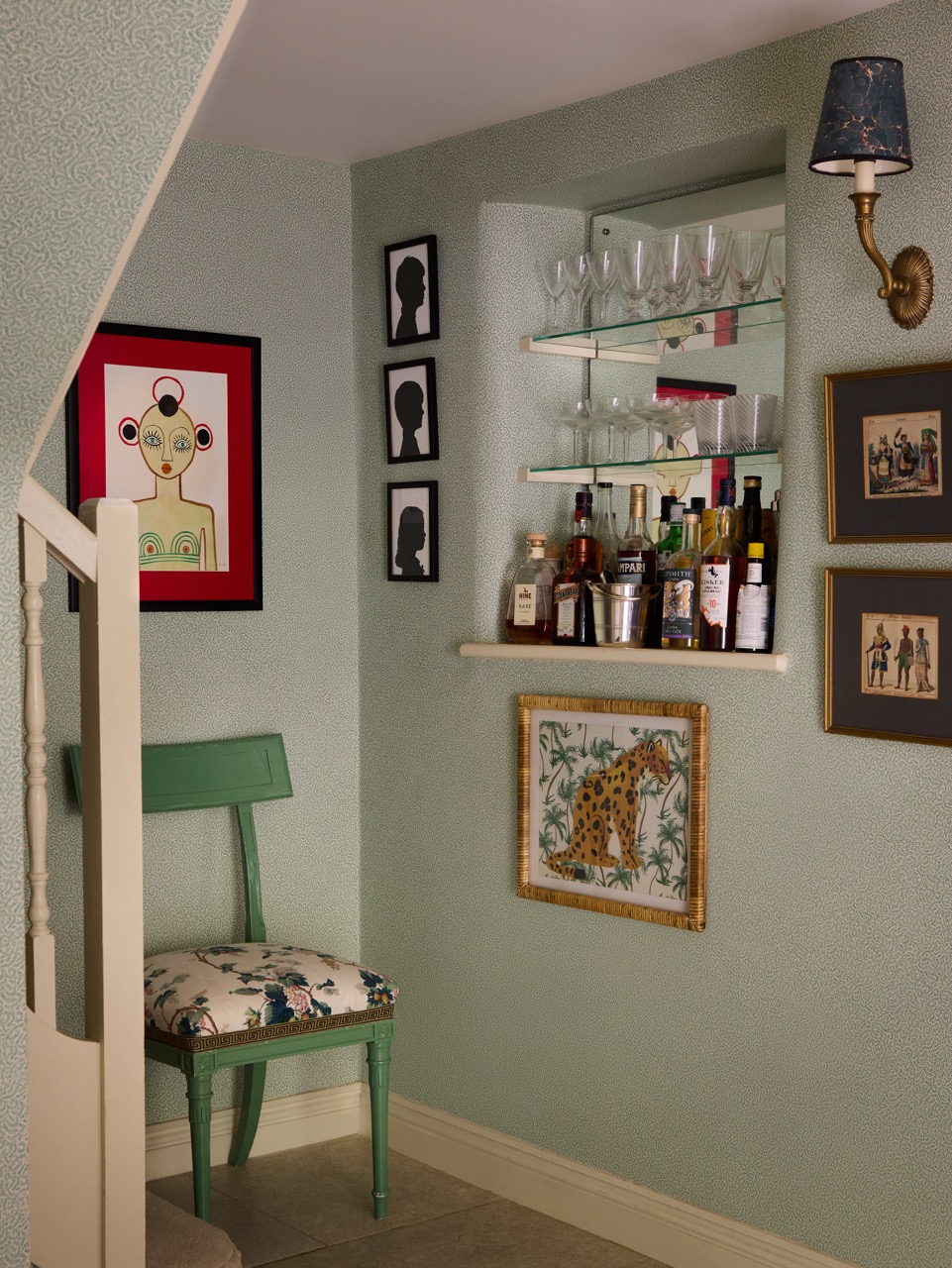
Emma Sherlock drinks cupboard.
But beyond what simply feels right, it can be difficult to gauge what the differentiator is between making a space look considered or thrown together. You can walk into a room and sense that it feels cluttered, but not know how to make it better. It’d be easy to strip everything back in the name of worshipping at the altar of Scandi minimalism, but where’s the personality in that? Enter the experts. We’ve consulted the best in the business, who’ve highlighted the cardinal sins to avoid when hanging art in the home.
Don’t Default to Prints
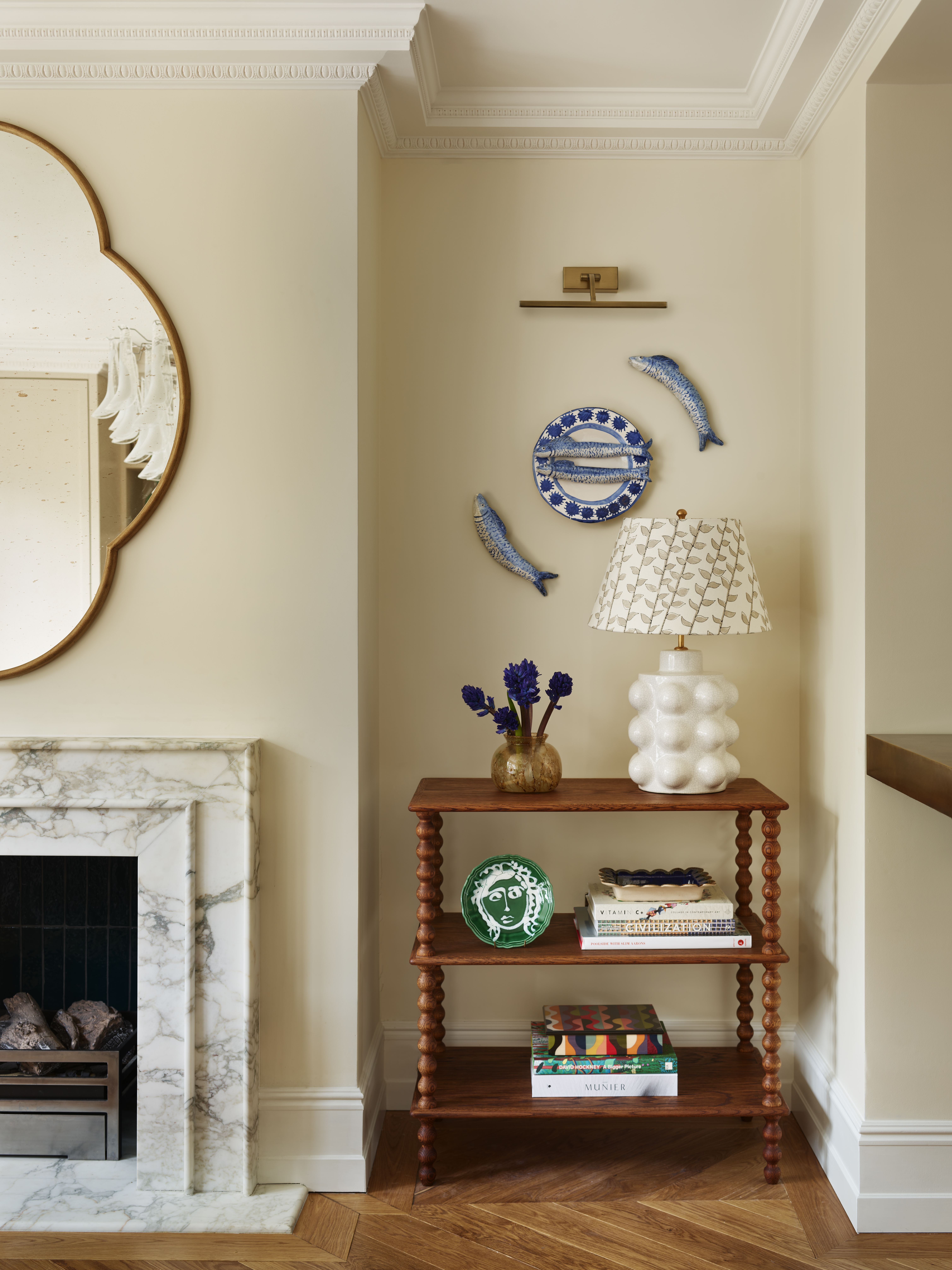
Experiment with mixing media. ©OWN LONDON.
Perhaps the more pedestrian approach to art starts with prints – the great art equaliser. Were we to equate it to fashion, prints (with the exception of limited editions) would be the high-street equivalent. Often necessary, easily accessible and inexpensive. Marcelina Janiszewska, Head of Design at Project London, encourages us to “think beyond the obvious” and avoid cheap mass-market prints which are “instantly recognisable and increasingly overused on social media”. Instead, look for independent artists working with different mediums - embroidery, ceramics, sculpture, oils, acrylics, watercolours, mixed media, textiles and tapestries. Marcelina encourages people to mix formats to “add genuine depth and interest to a space in a way that a uniform collection simply cannot”.
Don’t Go Small
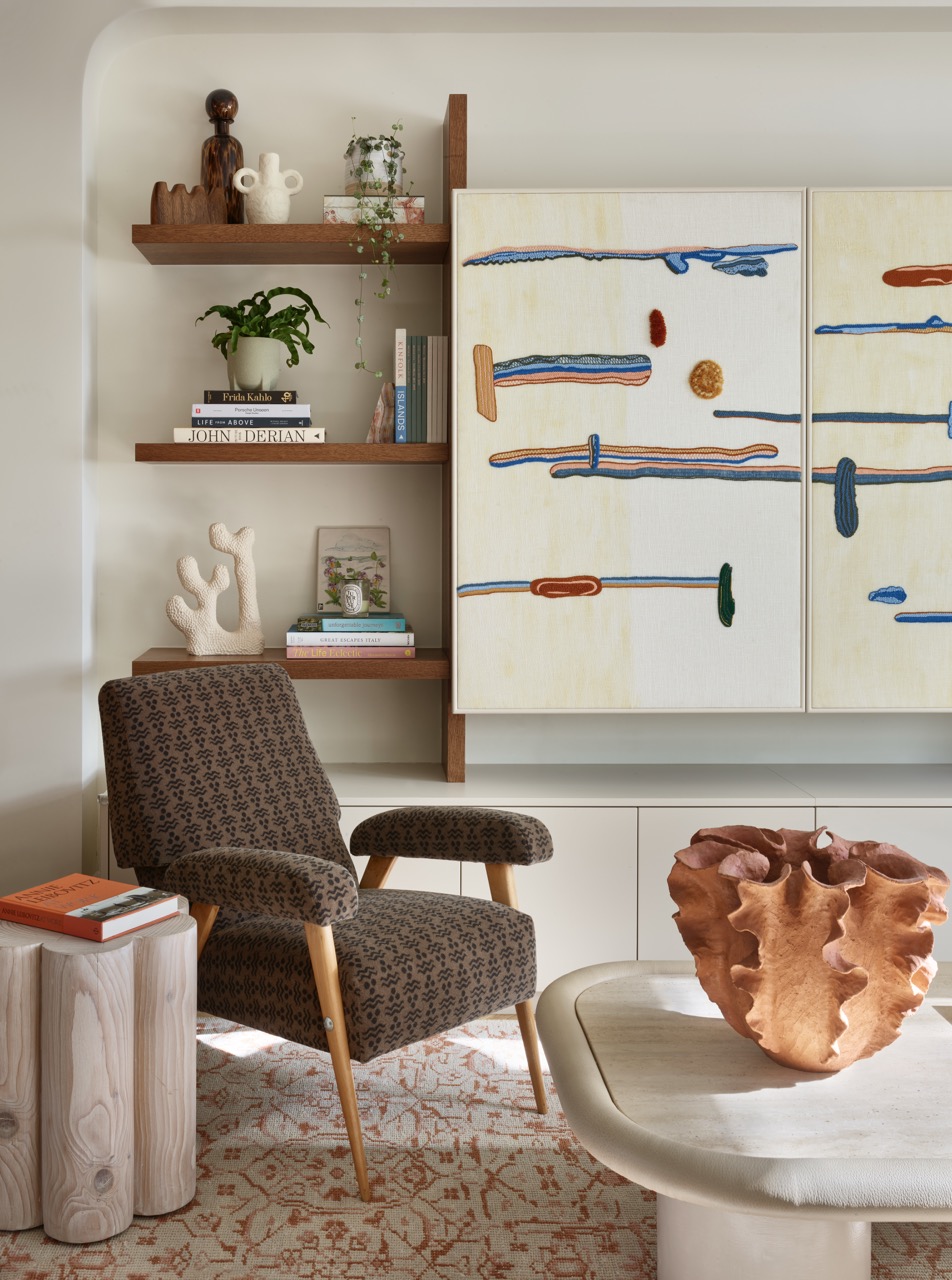
Large pieces of art can be a real statement. ©OWN LONDON.
“When it comes to what I love to do, oversized art is something I return to again and again”, says Alicia Meireles, Creative Director of OWN LONDON. “A single, powerful piece can be enough to anchor a room and give it real soul.” Larger art simply looks more premium. It’s a statement and a real indication of good taste – you can hide behind a small piece, you can’t with larger art. All the clichés ring true for a reason – the bigger the risk, the bigger the reward. Go big or go home.
Approach Gallery Walls with Caution
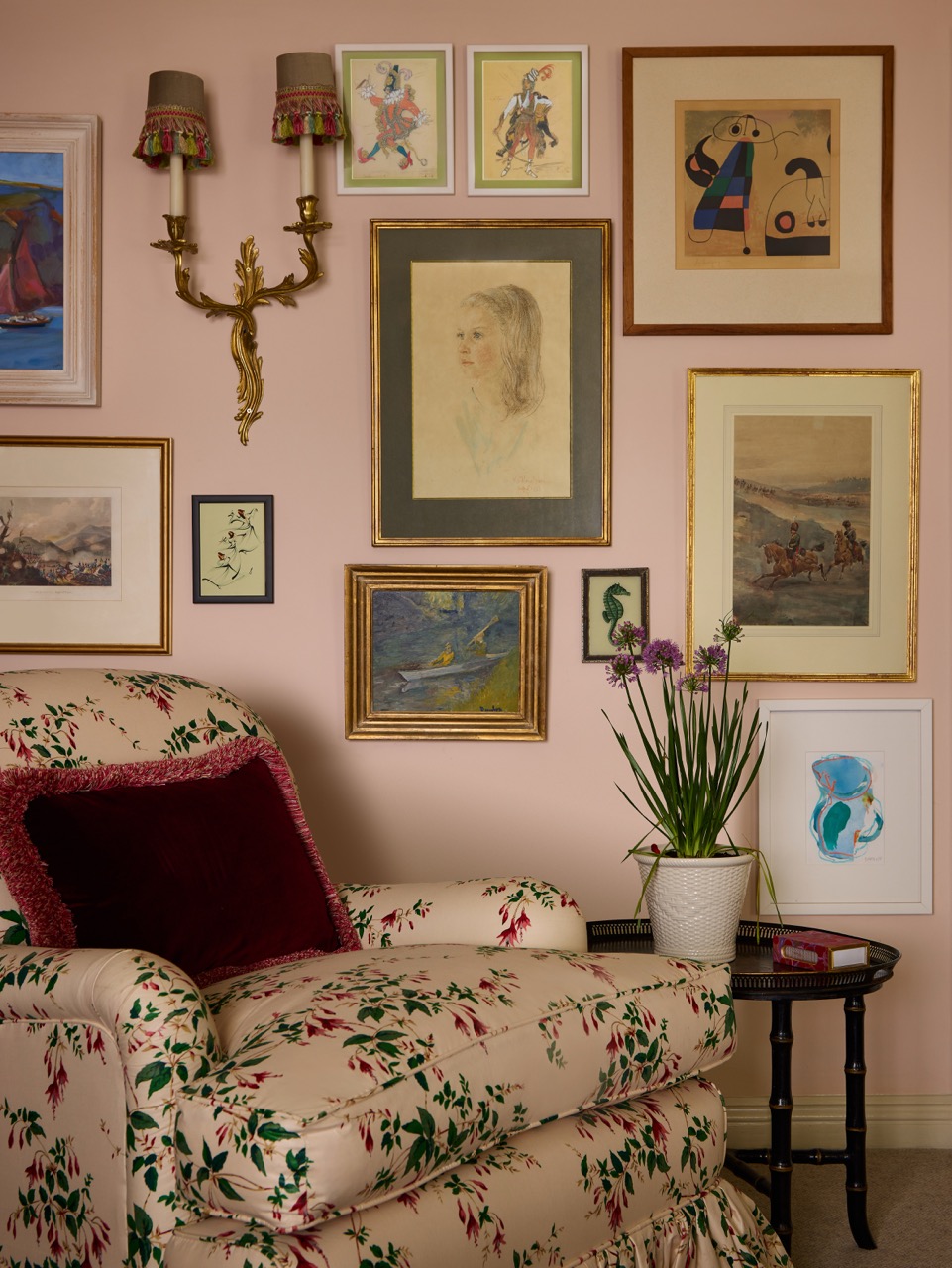
Well-executed gallery walls. ©Emma Sherlock.
Any interior designer worth their salt will tell you to follow trends at your own peril. Even “timelessness” has now been repackaged as a social media aesthetic. But one huge trend from the past few years that has emerged is the gallery wall. One to approach with absolute caution. Katharine Pooley recommends “avoiding scattering small works randomly across a large wall” as it “makes both the wall and the artwork feel insignificant”. Marcelina concurs, saying they “need intention”. She recommends spacing to be “either consistent or deliberately varied - a rigid grid rarely works well with artworks of different sizes”.
Don’t rely on symmetry
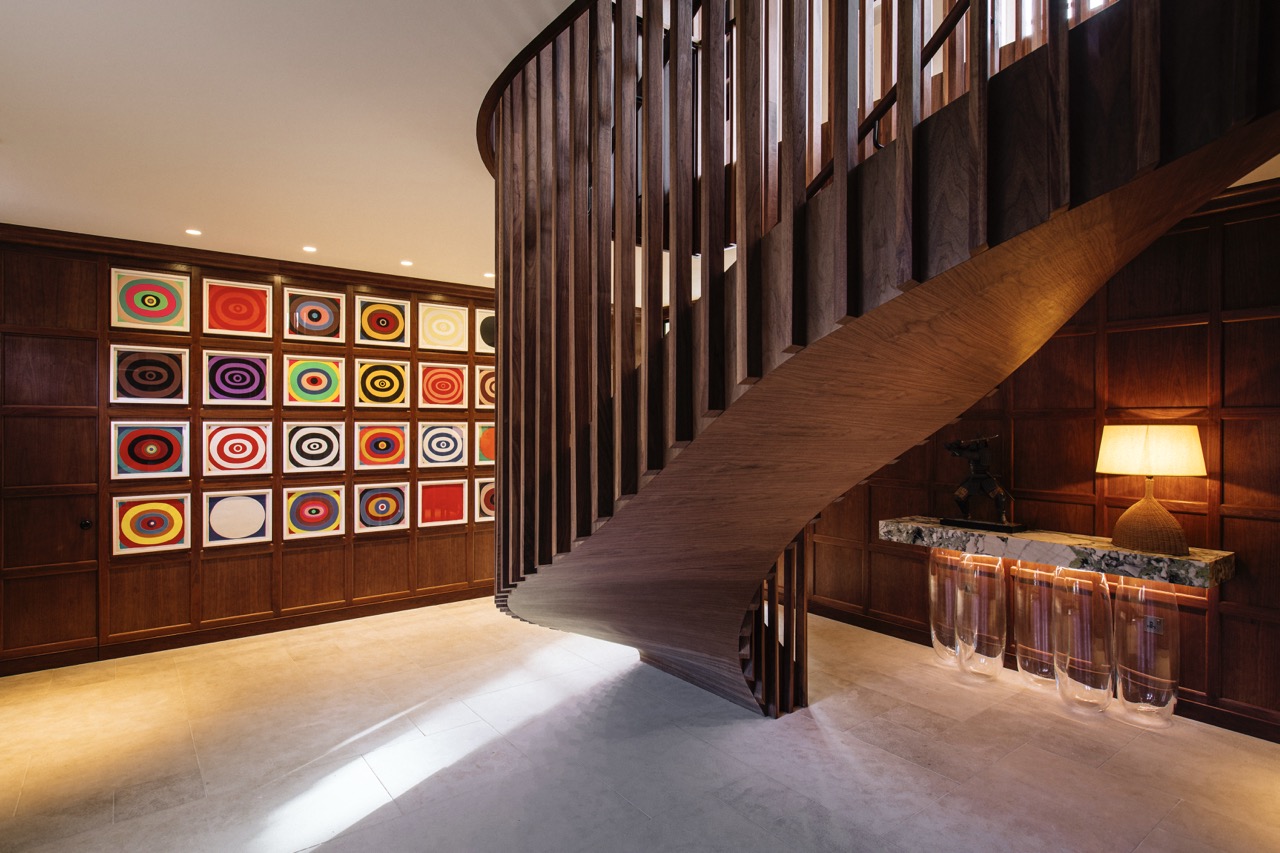
Art at the bottom of a staircase. ©Carpente Architecture.
There’s a delicate but important difference between symmetry and balance. Symmetry mirrors, whereas balance counteracts. Or as Christophe Carpente, Founder and Principal of Carpente Architecture, says, “balance doesn’t have to mean perfectly centred”. To create a sense of balance, Christophe often “places art somewhere unexpected – a corridor, a corner, beneath a staircase. Those quieter moments can feel more intimate and often create greater impact, transforming an otherwise awkward area into something special.”
Don’t forget about lighting
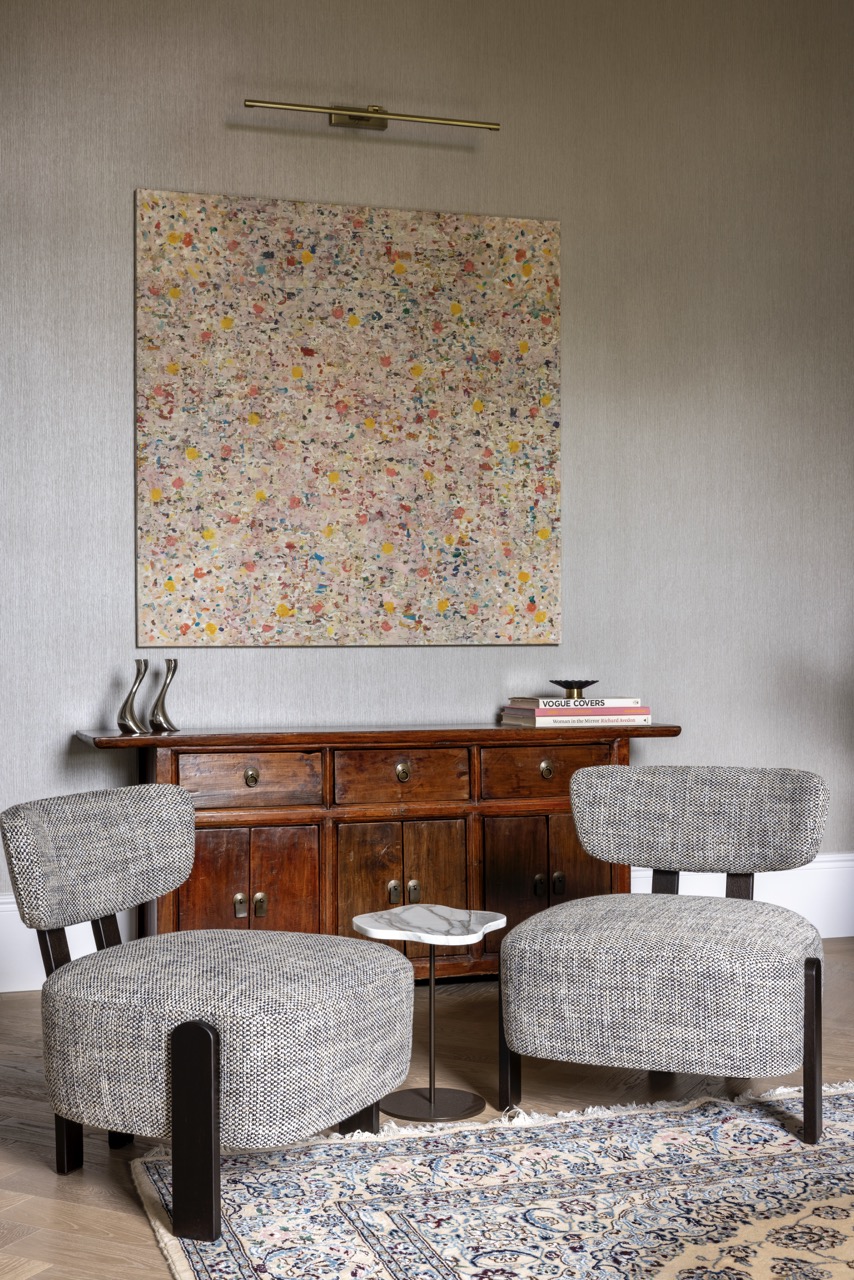
Install proper lighting for your art. ©Aaron Hargreaves's for Project London.
Lighting is incredibly important, yet often neglected when hanging art. Both from a portrayal and a protective standpoint. In galleries or museums, museum glass, which features an anti-reflective coating to block 99% of harmful UV light, is used. This principle of care should be carried over to the art in your home. Katharine recommends avoiding placing valuable art in direct sunlight as “UV exposure can fade pigments and damage work over time”. This, of course, means you need to find other means of properly lighting your art. Don’t worry if you find this tricky; you’re definitely not alone. Christophe labels poor lighting as the “most common mistake” he sees. To combat this, Katharine suggests “subtle directional lighting” to “enhance colour, texture and depth”.
Don’t be afraid to try wallcoverings.
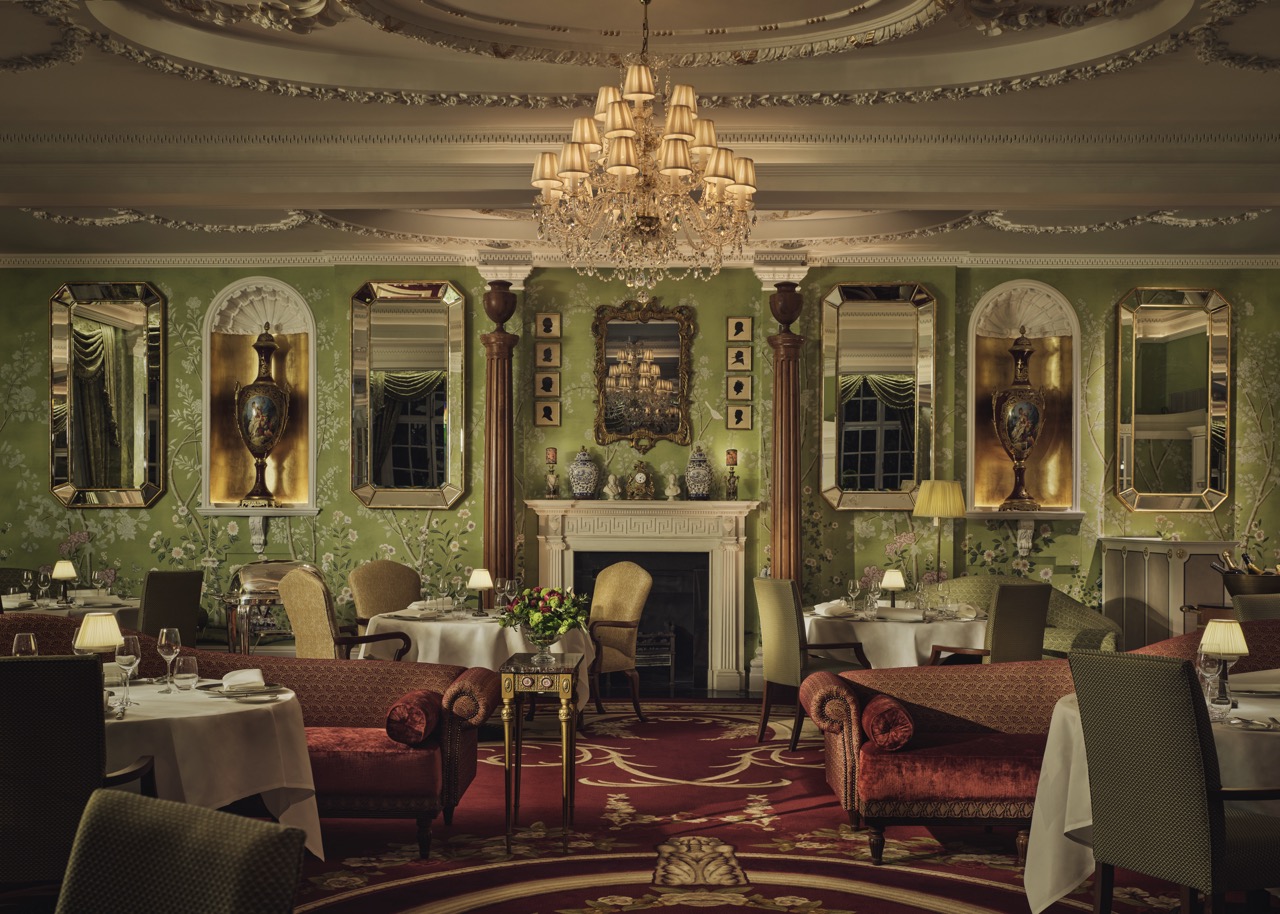
The Goring, Wallpaper Installation by Wells Interiors.
Works of art in their own right, wallcoverings “deserve to be treated with the same care and precision you’d give a painting”, says Mick Wells, Co-Founder of Wells Interiors. From hand-painted silks and embroidered grasses to panoramic murals, wallcoverings can truly transform a room. That said, they should come with a handle with care warning. Mick explains that “pattern layouts must be meticulously considered before a single drop is cut. If this step is rushed or misjudged, motifs won’t align, joins can become visible, and the entire artwork is compromised. With hand-finished papers, no two panels are identical, so installers must understand how to balance and sequence panels to preserve the overall composition”. Another common error is failing to prepare the walls first: “they must be perfectly smooth, correctly primed, and stable.”
Don’t shy away from layering art over wallpaper
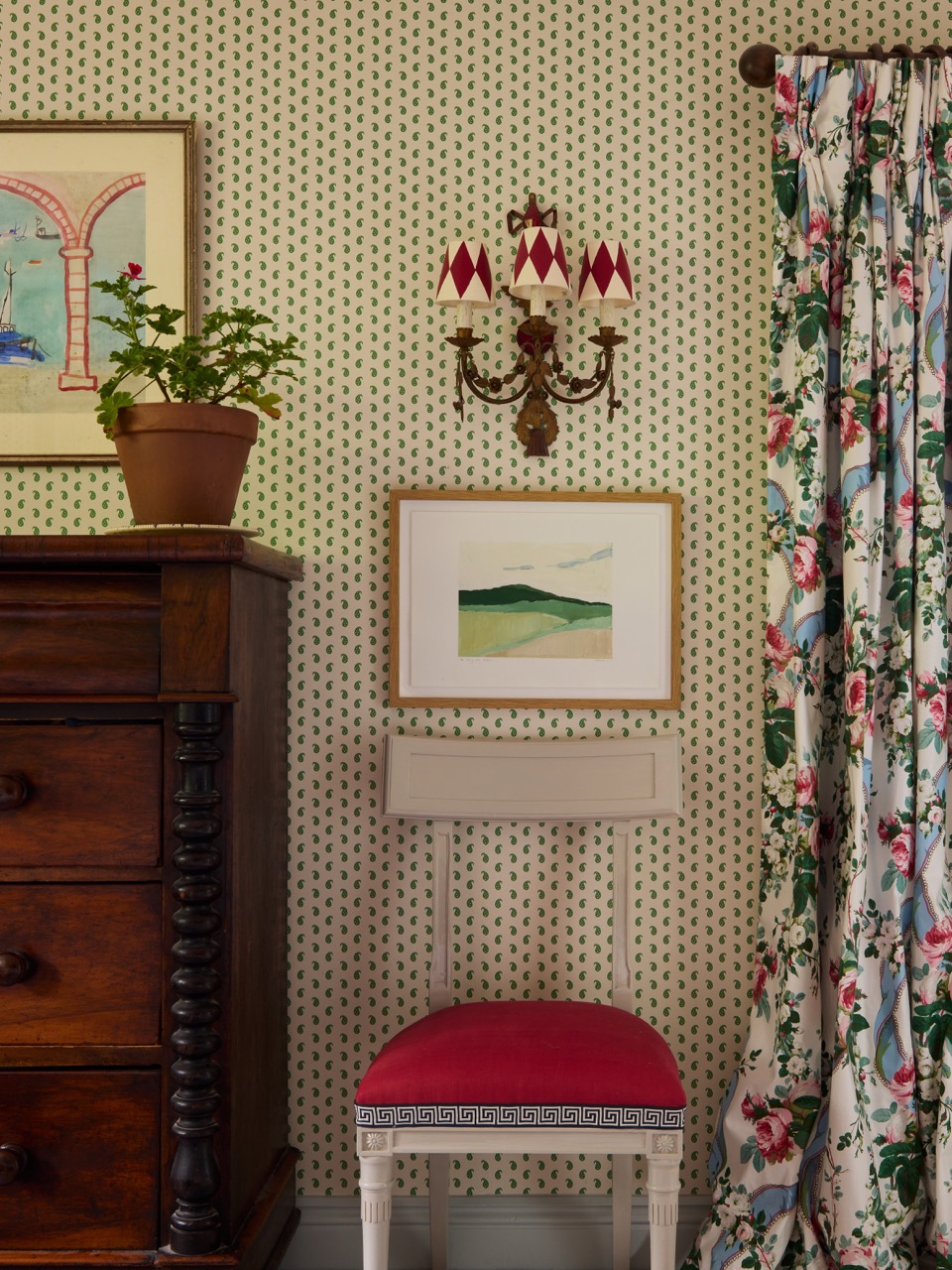
Hang art over wallpaper.
Minimalists look away. Hanging artwork against a printed backdrop may feel counterintuitive or busy, but it can create real depth. Interior designer, Emma Sherlock, reminds us that wallpaper is “only meant to be the background to a room, not the main event”. She counsels to first think about colour combinations. By using the right colours, Emma finds she can “help balance a room or help accentuate specific colours” in the wallpaper itself.
Don’t forget about the TV
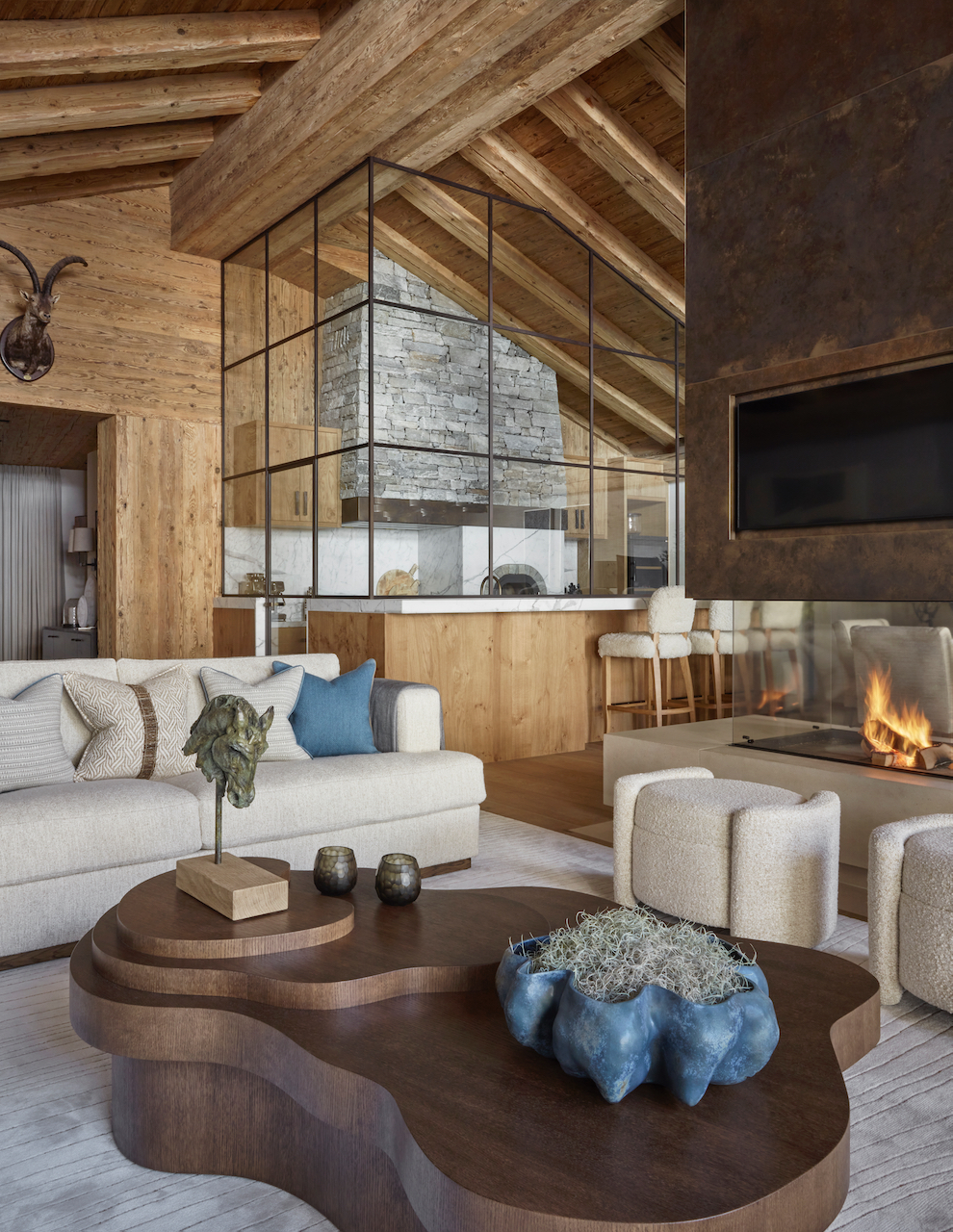
Katharine Pooley has tastefully framing a TV. ©James McDonald.
Often treated as a necessary evil, a TV can easily become the most visually jarring element in a room if left unconsidered. The real amateur giveaway, however, is a visible cable, which Marcelina argues “can undo everything around it”. Please, please make sure all TV covers are tastefully concealed - whether chased into the wall, threaded through cabinetry or painted to match the wall.