To say I envy people who, even as teenagers, could roll out of bed, splash some cold water on their faces and get on with their day, would be a gross understatement.
How AI is Shaping Skincare
Words by
Clara Taylor
13th March 2026
Clara Taylor takes a look at how AI skincare is making the products, facials and treatments we use more bespoke than ever.
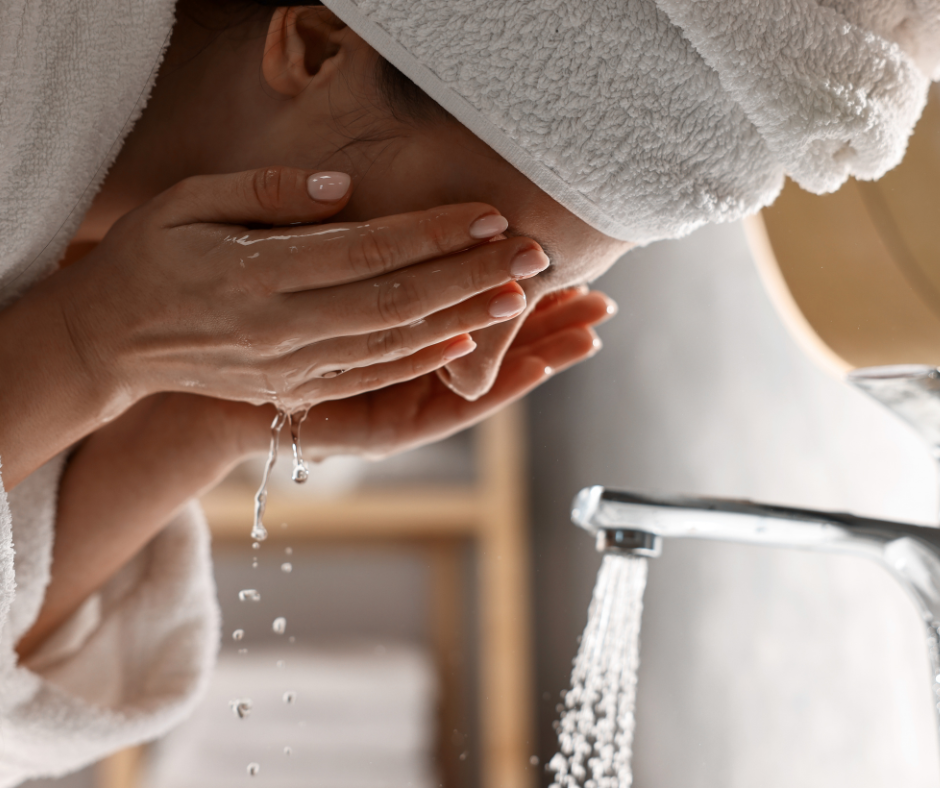
The dream of being able to just wash your face with water.
I have tried everything in the pursuit of good skin. Growing up, I had the typical teething issues with acne and saw my first dermatologist at 16 years old. Sat before my doctor, who to this day I still can’t tell if she’s 35 or 65, I was introduced to an entirely new vocabulary: salicylic acid, microdermabrasion, blue light, Roaccutane, amongst others. More than ten years later, these words unfortunately still have to play a role in my daily routine – woe is me.
So, when I received the invitation to try an AI facial, I was more than intrigued. Not just because I was unsure if this would entail a treatment carried out by some sort of robot, but because maybe, just maybe, technology could help where other avenues have failed. And that’s how I found myself sitting in a marbled, floor-to-ceiling, waiting room in Mayfair.
Since the great AI boom (or bubble, depending on who you ask), it has filtered into everything from work emails to workout plans. Dr Jack, a London-based aesthetic doctor and founder of Dr David Jack Clinics, has noticed that patients increasingly arrive having consulted AI tools, asking more specific questions about ingredients, treatment options or product routines. “When patients feel better informed, consultations become more productive and discussions can move quickly into the detail of what is actually appropriate for their skin”, he observes.
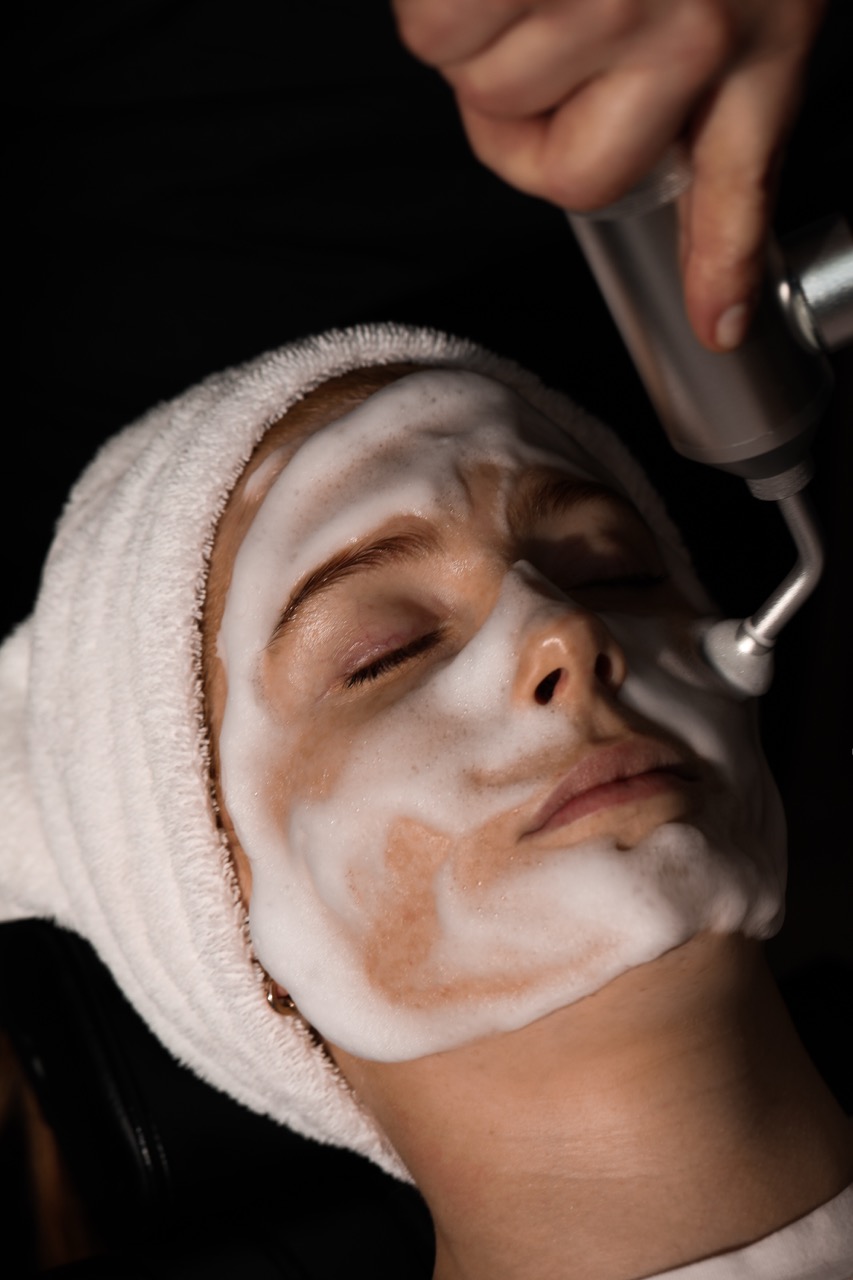
Dr David Jacks Clinics in Harley Street, Belgravia, the City and Edinburgh.
Within clinical practices, AI-driven imaging and analysis platforms are developing rapidly. This is precisely the treatment I receive, the Apeer Pro Facial, conducted by Nurse Nicola, an aesthetician and medical nurse. Turns out no robots are involved; in fact, it’s far simpler than I’d anticipated. Nicola ushers me to the window of her treatment room and gets me to take a selfie of my face, which is subsequently scanned through the Apeer website. The result is a four-category score based on hydration, redness, acne and pores, and roughly your skin’s age. I don’t score well. I’m told my skin’s age is nine years older than my actual age (rude) and that I’m acne-prone, dehydrated and dealing with increased redness. Stunning.
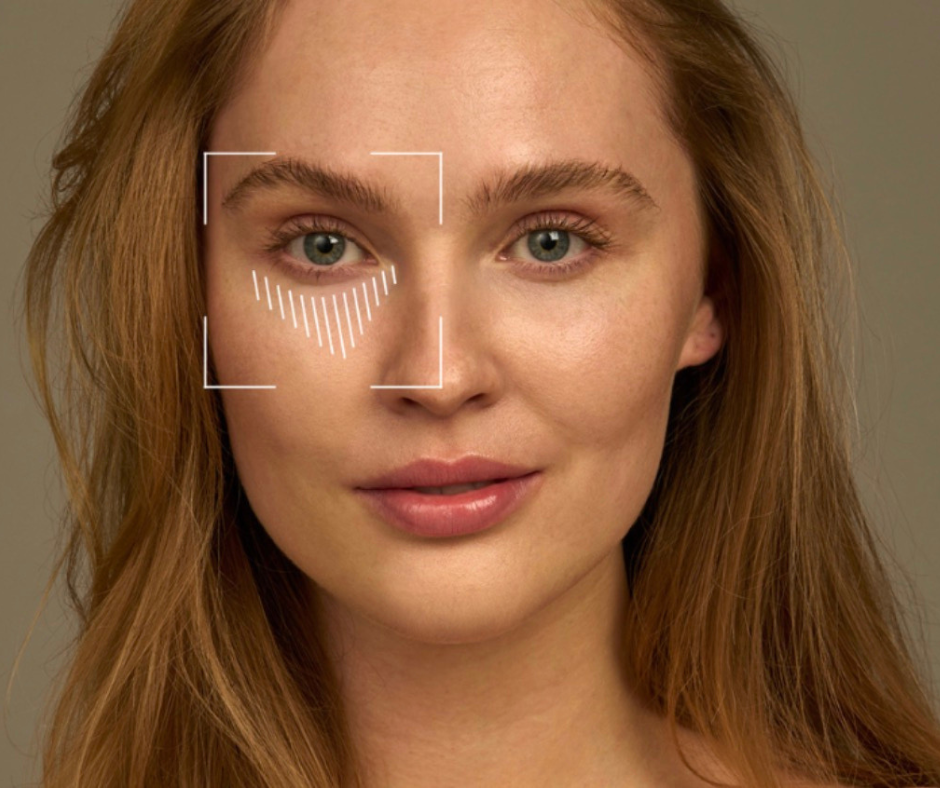
Apeer's AI facial analaysis measures the quality of your pores, acne, fine lines and redness.
Fortunately, Nicola is on hand to calm me (and my skin) down. After a rather panicked overview of my skin’s history – the conflicting advice from different dermatologists, the prescriptions, various product regimens I’ve followed – she tells me I’m doing way too much. Any congestion I see today is a result of layering overly harsh products, which I’m certainly guilty of. As someone who considers themselves pretty literate when it comes to skincare, I’m also shocked when Nicola points out my retinol isn’t working for me. Yes, it can marginally resurface the skin and soften fine lines, however, it can aggravate the skin barrier, which in turn creates textural issues.
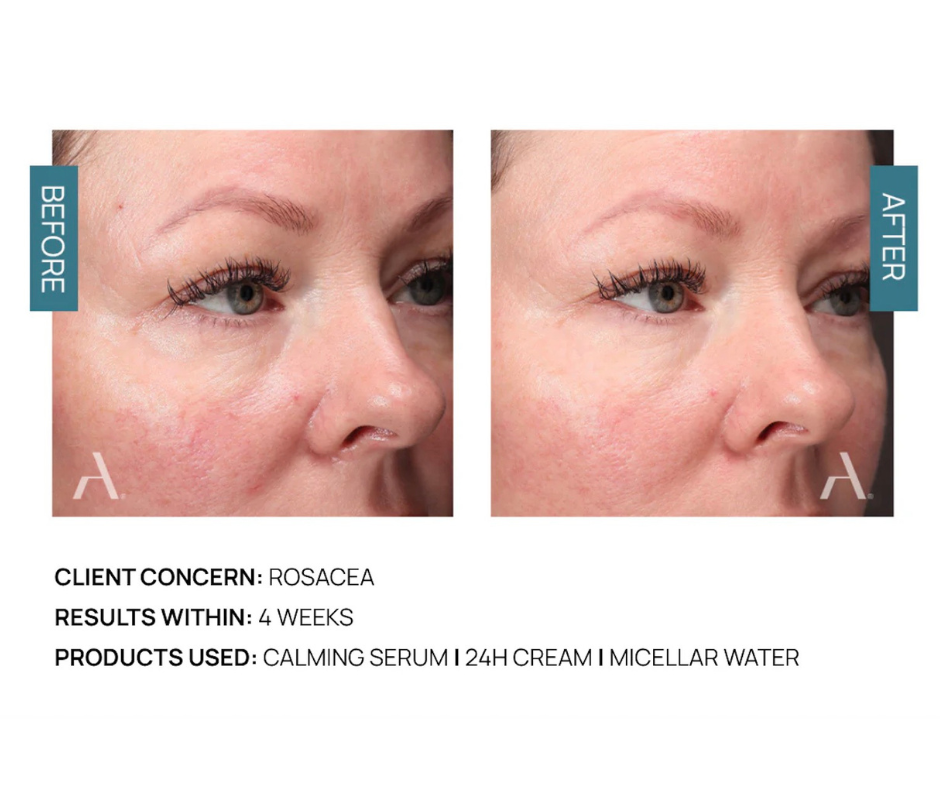
Before and after using Apeer 24hr cream and calming serum.
Armed with my results, Nicola selects four products to be used morning and night. A gentle - emphasis on the gentle - cleanser with a small percentage of salicylic acid, which breaks down sebum, dead skin cells and dirt, and an anti-redness serum designed to bring your skin barrier back into balance. To accompany these is the 24hr cream, a thick moisturiser designed to keep you hydrated all day and night. Of course, as someone who’s been religiously using water-gel-esque moisturisers, out of fear of any breakouts, this makes me incredibly nervous. Nicola reminds me that in fact, by not adequately moisturising, I’ve been making myself more susceptible to said breakouts by sending my oil production into overdrive. The fourth product is a weekly hydrating mask containing hyaluronic and glycolic acids, designed to improve elasticity and nourish the skin. And that’s it. No twelve-step, TikTok-curated routine. Just four simple steps.
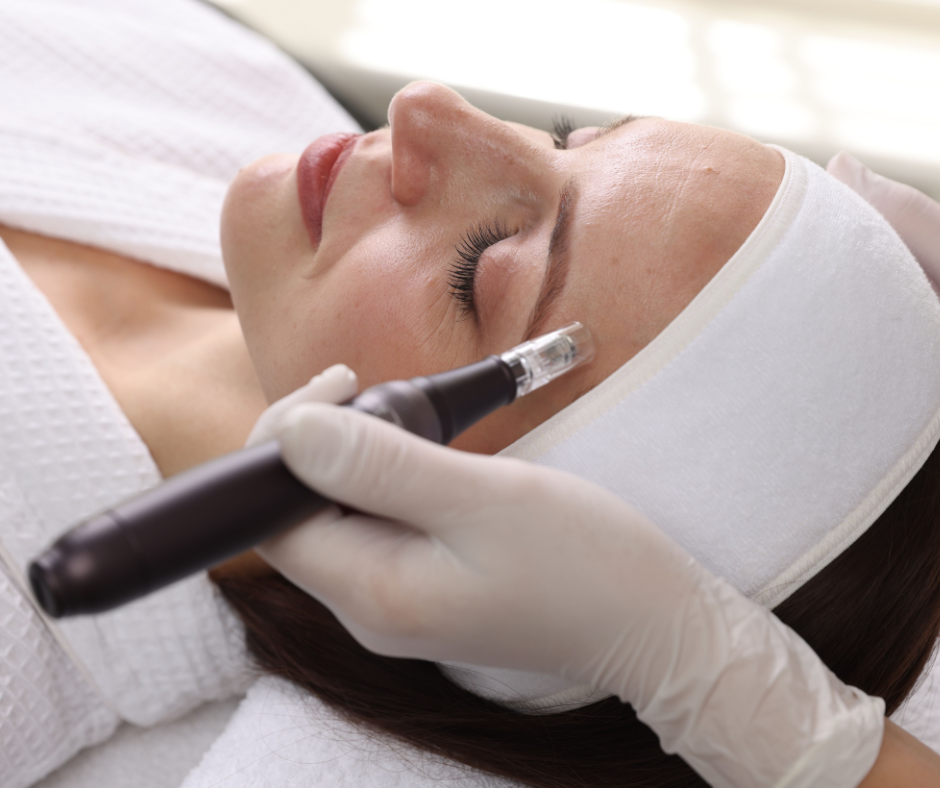
The use of microneedles can improve collagen, elasticity and reduce fine lines.
The facial itself followed the same philosophy. Starting with a gentle cleanse, before layering respective calming serums and eventually some microneedling: the process by which tiny needles penetrate your skin to promote collagen production, which is apparently much needed given my skin seems to be nine years my senior. If you haven’t had this yet, you’re truly missing out. To see the full results, you need to commit to a series of treatments, ideally monthly, however, the results are fantastic, especially if you’re looking to steer clear of injectables. With that said, it’s not a lunchtime treatment. Fair warning, it takes a few hours for the redness to go down, but the improvements are worth it.
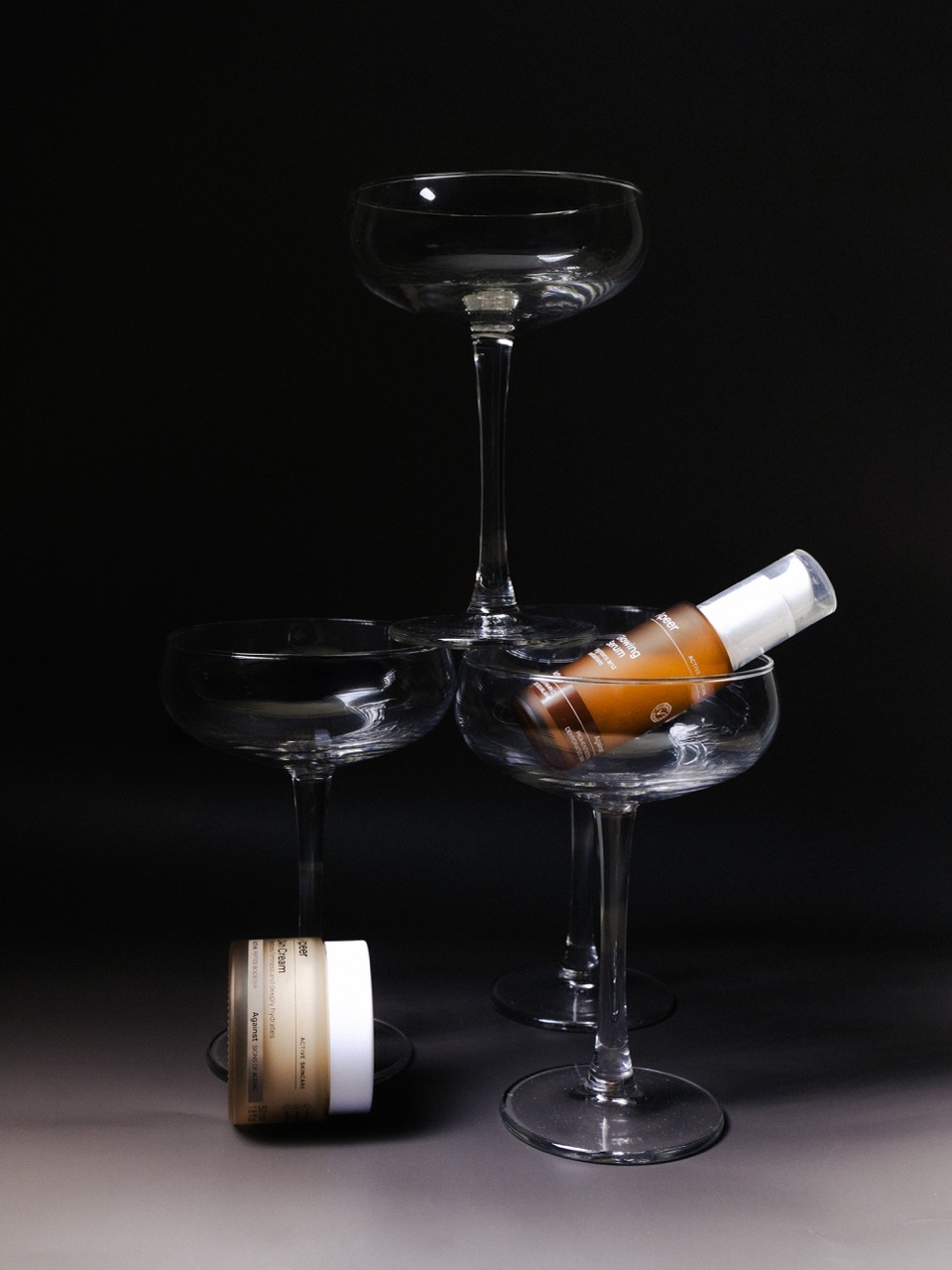
Apeer 24hr cream and serum.
I am blown away by the experience. As soon as I can, I rerun the analysis and my skin age has already reduced to 24, which frankly makes me smug and reassured in equal measures. It has to be said, though, that it’s the human touch I find most impressive. Yes, AI underpins the treatment, but it’s the wealth of knowledge Nicola imparts that sticks with me. For one, she shares the same skin concerns as me and her skin is glowing, which means she clearly knows her stuff. But also, she’s clearly listened to me, assuaging my concerns in a way that any LLM could not.
Dr Anatalia Moore, of Dr Anatalia Aesthetics in Manchester, emphasises that this approach is integral as AI further embeds itself in the industry, saying that “no artificial system can integrate this context in the way a trained clinician does. Treatment plans require a deep understanding of the patient—not just an image”. She adds that she’s “seen patients self-diagnose rosacea or ageing concerns with at-home apps, only for us to discover an entirely separate and potentially serious lesion”, highlighting the limitations and at times danger of relying solely on AI. Perhaps the real promise of AI in skincare is not that it replaces expertise, but that it sharpens it.
While the technology may not be in place where we can wholly rely on it diagnostically, it’s absolutely changing the landscape of the beauty industry. Bespoke treatments have long been heralded as the future because, unsurprisingly, the more tailored to your skin, the better the results. Just like you wouldn’t expect mass-produced clothes to fit you perfectly, you can’t expect mass-produced beauty regimens to suit your skin perfectly. We’re already seeing this bleed into other parts of the beauty world, with organisations like DCYPHER using similar technology to create customisable foundations – so far, 73,000 different shades and counting.
As I leave the clinic with a pared-back routine and a slightly tender, microneedled face, it strikes me that the future of beauty may not be overly complex. The technology emerging isn’t here to introduce more buzzwords, scientific-sounding ingredients or overly complex regimes. Instead, it might simply be about creating smarter ones.
Articles may contain affiliate links; all selections are independent and at no additional cost to you.